Polina. Rybinsk – Japan
Part one. Preparation
Why did you decide to go to Japan?
This is the most difficult question. Everyone asks, but every time I do not know what to say. It was my dream. I really like Japan.
Have you been interested in Japan for a long time?
From the ninth grade.
From the ninth grade? Why did you become interested in the ninth grade?
Then the first anime appeared. They started writing about Japan. I liked cartoons, as all children. Anime is shot in such an interesting rhythm. In terms of speed, it’s not like American cartoons, it’s slower. Closer to ours, so it’s more pleasant to watch. I did not really like the American cartoons, Disney’s Chip and Dale. They were too fast. In Anime everything came together for me: great pictures, stories, heroes save the world.
And then?
I already do not remember everything that I’ve read. I thought that in Japan strong people live, clothes are interesting, weapons. It differs from us. Exotic.
Was visa difficult to get?
I was worried but we were prepared very well. Even more than necessary, we booked everything. The application passed unnoticed, I do not even remember if fingerprints were taken. Yes, they were. The visa was for free.
How long did you travel in Japan?
28 days.
28 days?
Yes, when we flew Japan Airlines, a stewardess asked:
– Tourists?
– Yes.
– For how long are you staying?
– For 28 days.
– 28 days? She was stunned. One could see the whole country!
There were so many emotions. She could not believe that one could have a vacation for so long.
In general, people were very nice. I was surprised. You could see on the Internet that they do not like to answer questions or talk to Europeans. It turned out to be quite the opposite.
Part two. How we lived and went to Fuji
In Japan we rented apartments. One of the owners asked us not to talk to neighbors, because they do not like very much when they rent out through Airbnb. The neighbors were actually very curious, they were ready to talk to everyone and tell everything. We discussed the weather, plans for the day. They wished us good morning. We had a very nice neighbor lady. I think she would talk to us even more if we could understand her better. If we knew the language, we could have found a guide in her.
We just went out of the apartment and she was outside: “Good morning, the weather is great today!” Very sociable woman. Although we were asked by the owner not to communicate, but how can we not communicate with her? When we were leaving, she went out to say goodbye to us, she asked where we went and wished us a good journey.
It was unexpected, because in Russia we do not engage in a dialogue so actively. Once we went out at a subway station to go to a temple. In a previous temple we bought a bottle of sake. It was a good sake, we tried. As we went, a man followed us, apparently, he was going in the same direction. He had to turn at an intersection and he began to tell us something. As we understood, he told that different sake should be drunk with different people. The one that we had was specifically to be drunk with friends. He tried to say something else, but our vocabulary was too little to understand.
Did you speak Japanese with him?
He did not speak English at all. We realized that we often understood Japanese better than English. The accents in English were so strong. Often I could not understand what they were trying to say in English. My friend understood them better.
Did you know enough Japanese to talk?
In fact, they explain clearly. Or if you go somewhere, they will show the way on the map.
Yes, there is an original numbering of houses.
Google helped a lot. I think that the person who invented Google maps is a genius, because without them many would have died before reaching home.
For me even Google maps did not always help in Japan. Once I had to get to a hotel. We left a train together with a colleague who was staying in a different hotel. He had printed maps but he went, as it turned, out in a wrong direction. I did not take a risk and asked a policeman. The policeman brought me to the hotel, it was about five minutes walking, and began to bow as a way to say goodbye.
Yes, everyone is bowing. We, too, began to bow. In terms of willingness to help, this is a separate topic. I have never seen anybody so concerned with my problems as in Japan. We went to Fuji, we decided that we should do it. We climbed the steepest trail, the most popular, but the steepest. It is difficult to go up, large height difference. I surrendered somewhere at the ninth station. It’s the last station before the top. The last station at the top of the mountain is number ten. We’ve had many impressions on the way up. We acquainted with a bunch of people: with guys from Nagoya, they had already climbed several times, with a football fan. He did not know many words in English, but he could expressed all the emotions: how much he liked the championship and how well the Russian team played. We also told him that the Japanese played very well. We understood each other. There is such an amazing unity of spirit among everyone who go uphill. There are also water and oxygen sold at the stations.
Oxygen is sold?
Yes, there are balloons with oxygen. We bought one.
What was the height?
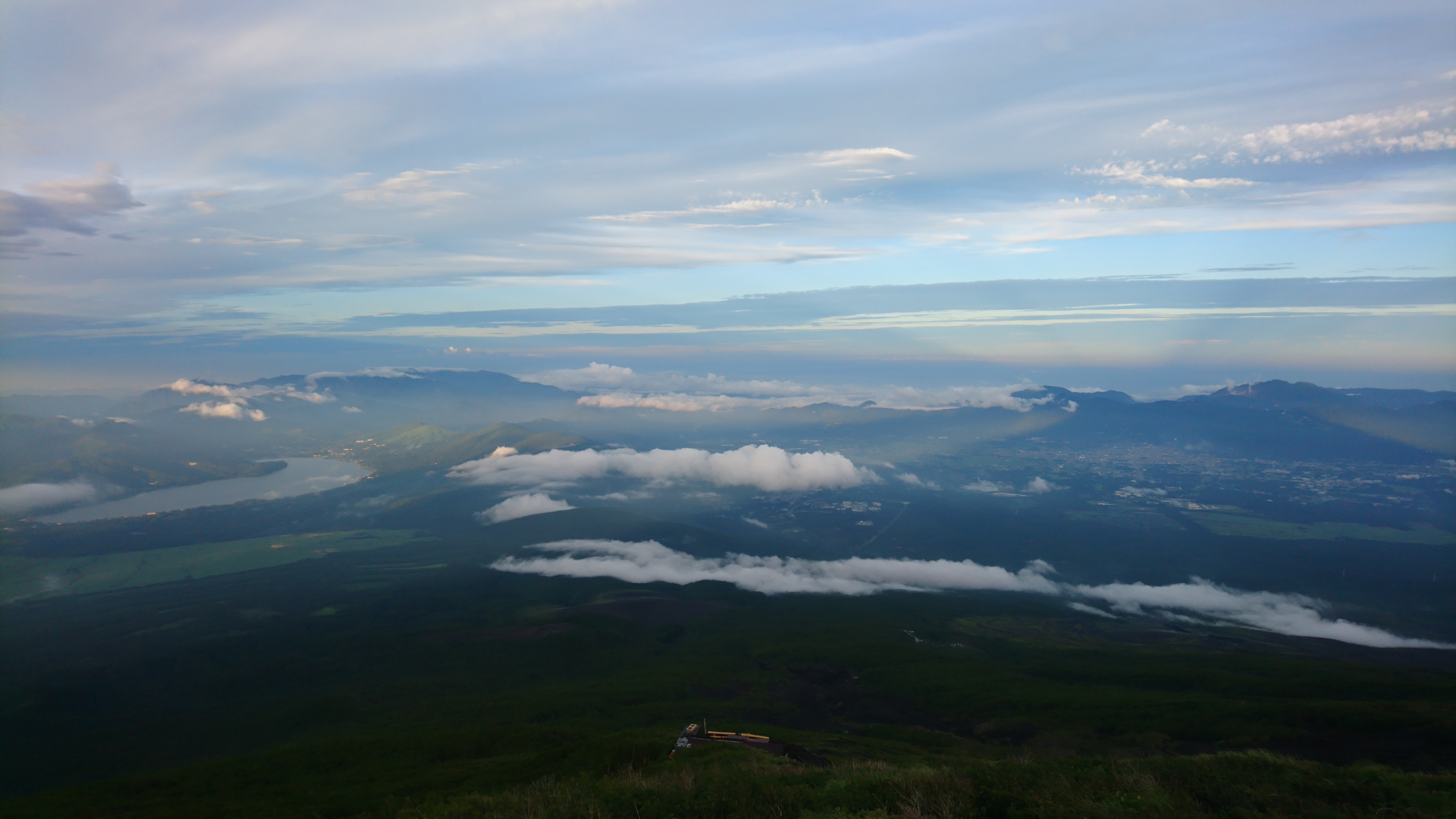
3776 meters is the 10th station at the top. But we did not reach it. We already climbed for a long time and we still needed to go down. The last bus was leaving at 8 pm. We thought that we would go along a short trail. It was closed, because of a mudflow earlier this year, but people still walked along it. We did not take into account that we had to turn back to the normal trail at some point. We did not turn off and we ended up on the other side of the mountain. We were going through a forest, it was getting dark. By eight o’clock it was as dark as it gets in the south. The path followed a river bed, apparently, the water is coming down in the spring. It was dark, there was nobody. At some point I saw a deer. I wished boars would not come out. Then we met two men with lanterns. Some people start in the evening, spend the night, for example, at the sixth station, and early in the morning they go up and meet the dawn on top. I asked them how to get to the fifth station. I did not realize that there is a fifth station on each trail, also the sixth and the seventh. There is only one tenth station on the top, but there are several fifth stations. Are we going right to the fifth station? – Yes. Is there a bus there? – Yes, but not anymore. Are there any trains? – No, but you should still go. How far is it? – Half an hour. The second breath had opened: we can still survive half of an hour. On the way, we’ve met a couple of Arabs, who were also looking for the path back. They went together with us. Now I was leading three people, I was getting nervous.
We went out of the forest behind a temple. It was already dark. There was a bus standing under a street lamp. The time was five minutes to eight, the bus was leaving at eight. A woman shouted to us: run faster, this is the last one. We ran to the bus. We asked the driver where the bus was going? He said: Gotemba Station. Where was it, we did not know. Can we get to Tokyo? – I do not know, the bus only goes to Gotemba Station. We decided to go anyway. We sat down. We were glad. The driver asked the dispatcher how to get to Tokyo. We were told where to get off, how to get to the station, when is the train to Tokyo, and even how much will it cost – the complete set. He dropped us off, went out with us, showed us how to get to the station. Where to go up, where to buy tickets.
The bus driver came out?
Yes, he stopped, went out, showed us everything. We were so glad. I did not see anywhere else so much help on the road as in Japan.
Another time we were going by bus from Nagoya, we came out on the wrong side of the bus terminal. We could not understand where to go. We were already late. Immediately we asked the police. They had photocopies of the station scheme and they showed us where to go. In less than a minute we were already running to the bus like crazy. What a service! I have never seen such concern about myself. Very sympathetic people. I just imagined what would happen if I were to come out from our village here and ask how can I get to Moscow.
How long did it take by train from Fuji to Tokyo?
About an hour.
Part Three. Deer in Nara
Nara is the ancient capital of Japan, not far from Kyoto. There is a famous park with deer. Many people go there to feed them. We also decided to feed the deer. In the park they sell cookies, which we immediately bought. As it turned out, the deer are very insisting. They take away cookies aggressively, grab by T-shirt, stand with their feet on the shoulders, pull the bag with the cookies: “Give the cookies faster! Why did you buy them: to hold or what?”
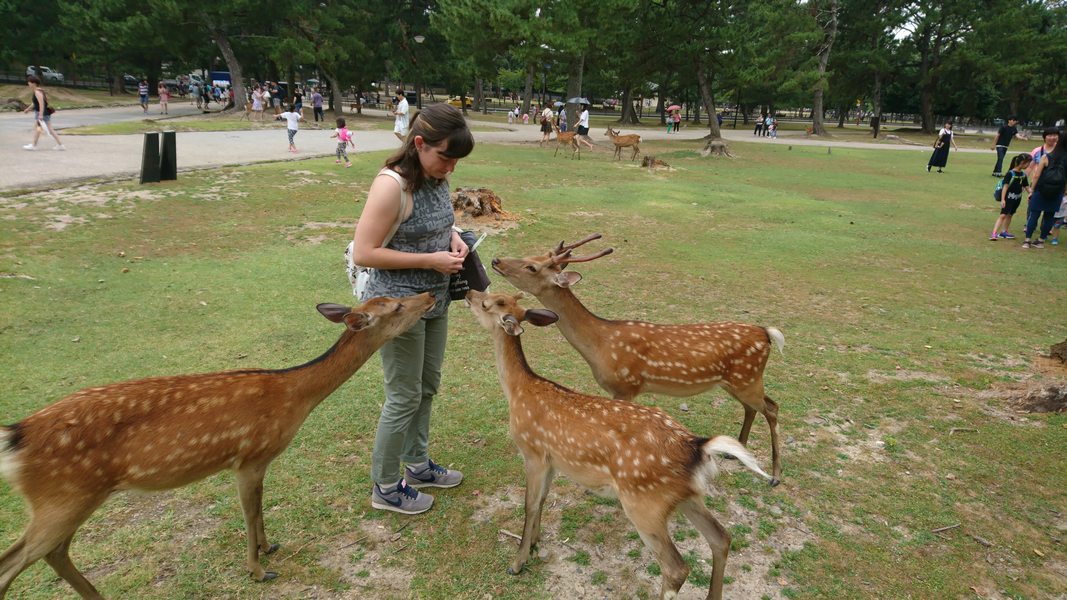
When we bought the cookies for the first time, it looked like this: “take them away, just do not touch me!” We threw them all the cookies at once. Everyone does that, the first time. Many deer come to you immediately, while you, as a fool, stand there with the cookies.
Then we realized that there is an “instruction”, how to behave with the deer. It turned out that there are gestures, which deer can understand. For example, you can show that you will not give them anything and they need to leave you alone. But what I liked the most: the deer bow to you. If you bow to them, they bow to you. We shot a video as we stand and bow with the deer. Then it went better. Interestingly, the instruction hangs where the cookies are sold, but it is impossible to read it, the deer come: “Why are you standing here, are you going to take the biscuits?” They pull the T-shirt. One deer ate half of my paper map. It grabbed and pulled the map. So our map went away. They go where they want, they are not allowed to enter only the temples. They are like cows in India. This way we have comprehended the art of controlling deer.
If I remember correctly, in Nara in Kofuku-ji there is a high pagoda?
It is an old one, one of the oldest surviving pagodas. Usually everything is reconstructed there. We were in a castle in Osaka. It was restored, it burned three times. From the original castle there is probably only the view from outside. Inside there everything is new, lifts for the disabled. They are reconstructing many historical buildings.
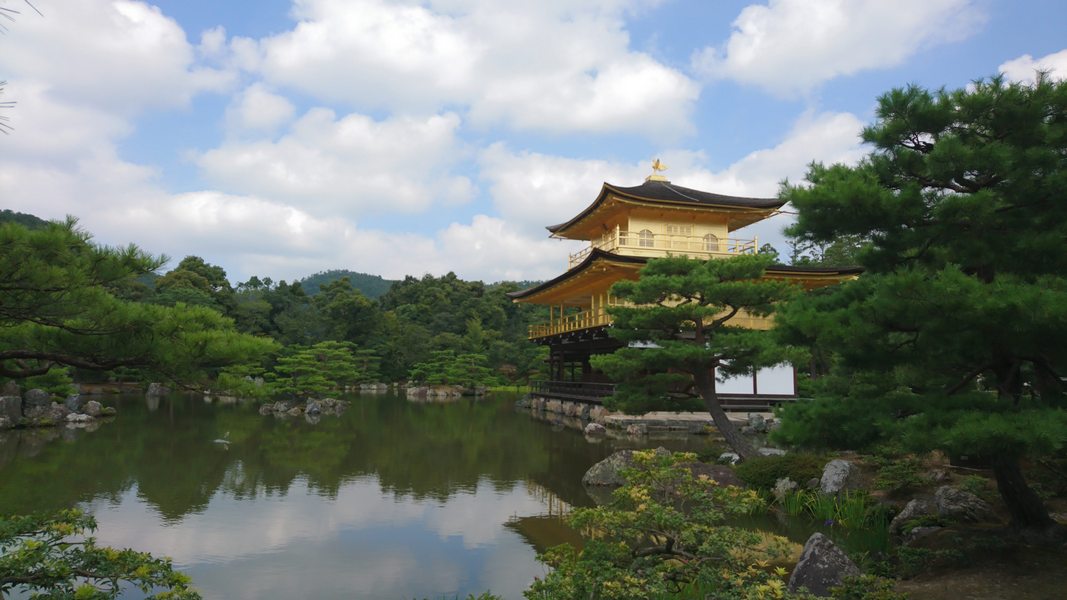
The only one that was not rebuilt, as we understood it, was the Golden pavilion. It is really from the 17th century. They sometimes call a construction from the 16th century, but in fact they could have dismantled and assembled it again. Clan wars until 1870. In the Bakumatsu time, almost all of Kyoto has burnt down, so what could be saved there? In the Second world war, many cities were bombed.
What was the first impression of Japan?
We had a shock. We thought that Japan is the country of the future. A lot of technology, automation, cities in neon lights. Everything is sparkling, flying. But it turned out that it was not like that. It’s comfortable for life. As if you live in suburbs. Credit cards are often not accepted, nothing flies, not so many neon lights. Everything is somehow for people.
I also understood how to correctly issue flyers. It turned out that the secret is simple. First: the flyer should be made by hand, and second: the city should have no trash bins.
In Japan there are no trash bins?
Did you not notice? In general there are no trash bins. There are trash bins only for bottles around the automats that sell water. The rest of the garbage you carry with yourself. It is often written: take all the garbage with you, somewhere it was even written – home.
What was on the flyer?
Some sort of karaoke. We did not go. I remember also passing rooms with gambling slot machines. The entrances are like the gates of hell. The machines are very noisy. When the doors open, first, you feel the cold, second, the machines are noisy and there is loud music. Imagine, you walk down the street, it’s quiet and calm. Then the doors open – it’s like the breath of hell. Then they close – and again it’s a paradise.
We were in a store of manga. So many perversions I have never seen in my life (besides the normal manga, of course, they have decent ones as well). Entire floor. I was standing in a corner. There, usually, young guys walk in. I’m standing alone in a corner, rather uncomfortable. We wanted to buy a present for a friend. I stood at the entrance. They looked at me: “Oh my God, she’s alive!” I did not go further than the first rack. In any case, we never bought a gift: we thought it would be to intimidating. I was afraid that a little more and my psyche would not survive.
Another surprising thing is that they really wear kimono. Not only young people, but also people of the older generation. They wear it a lot. We do not go around in traditional Russian clothing, but they wear traditional Japanese. In summer, it’s a very popular clothing.
The clothes are not too warm?
No, it’s cotton. Ukata is made of cotton. It seems to me that it is more comfortable to wear in hot weather than ordinary clothes.
Part Four. Matsuri Festivals
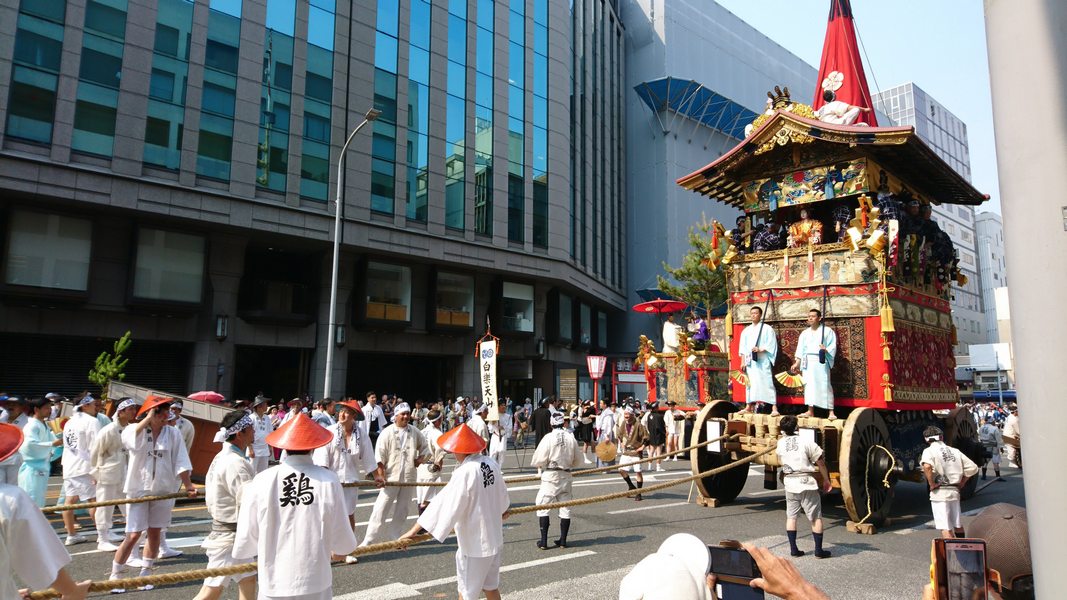
We were on two traditional festivals. The first one was the Gion Matsuri in Kyoto – this is the festival of great chariots. There are a lot of preparations, the streets are blocked. On the first day, chariots are assembled (they are kept disassembled) and exhibited in the streets. In the evening there are festivities. On the second day the chariots are transported from one big temple to another. Very spectacular: the chariots are huge, several men drag them. In the procession people play music, dance, carry altars. There are many chariots. Each templae has its own chariot or a palanquin. Very beautiful. Then they come back, but not all of the chariots, only a few. Gion Matsuri is one of the three largest festivals in Japan. There is one in Tokyo, Gion Matsuri in Kyoto, and Tenjin Matsuri in Osaka.
What is the difference between these festivals?
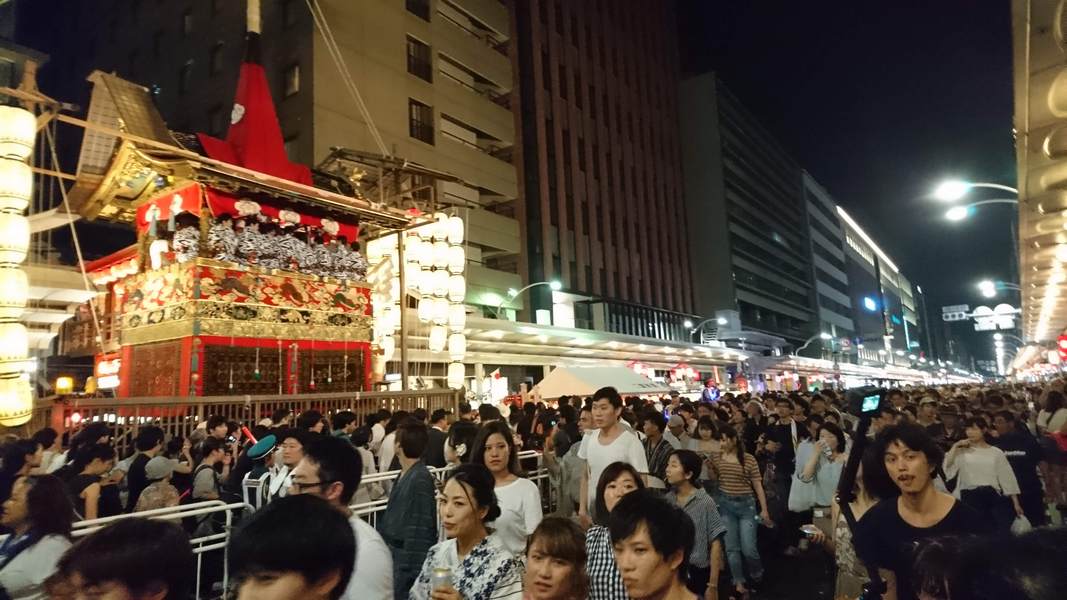
These are mostly Shinto festivals. Some rituals are performed. Offerings are given to spirits.
Tenjin Matsuri in Osaka is dedicated to a scientist. There is a parade during the day with palanquins. In the evening they go boating on the river. Then late at night there is a firework. We watched the parade, the barges, and the fireworks.
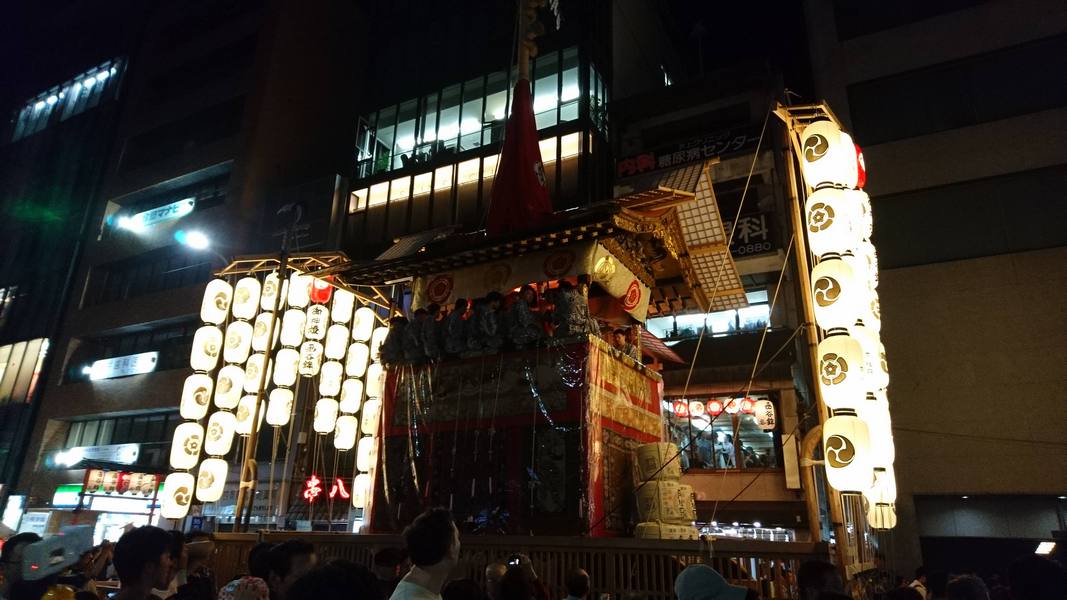
We found Gion Matsuri to be the most spectacular. The great chariots are very impressive. They have wooden wheels, everything is made of wood. There’s a whole art to turn around. In order to turn the chariot, they scatter bamboo under the wheels and spray it with water, some wheels are wedged, the others turn. There are two people who manage the team, they stand with fans in the chariot. There are more people standing on the top of the chariot, they play flutes.
Chariots are dragged by people, not horses?
Yes, people, in certain traditional clothes. Each temple has its own chariot. The chariots and palanquins are embroidered with stars, trees, animals, very colorful.
Part Five. Ocean, apartments, train, metro
Did you go in rush hour in the subway?
Once there were a lot of people. There are special employees who help squeeze people into the car. There are already a lot of people on the train, but if you also want to go, you approach an employee and ask for help. He helps by pushing you inside. He says “I’m sorry”, and presses you and the bag so that it does not stay outside.
Were there separate men’s and women’s wagons?
There were signed cars, but the rule did not work at that time. We went from a festival, there were just too many people.
We also made a feat: we bathed in the Pacific Ocean. Not far from Osaka there is a place called Toba, Ago bay. There are many islands around where pearls are grown. We reached one of the islands on a ferry. The beach was empty, there was almost nobody there. It took us three hours to get there and three hours back, we swam for an hour. We also went to a pearl shop, they explained to us how Chinese pearls differ from the Japanese ones.
They are directly grown in the sea?
Yes, there are plantations – fenced off the territories in the ocean.
The fruit are very tasty in Japan. Did you buy fruit?
I do not remember buying fruit, I liked tofu.
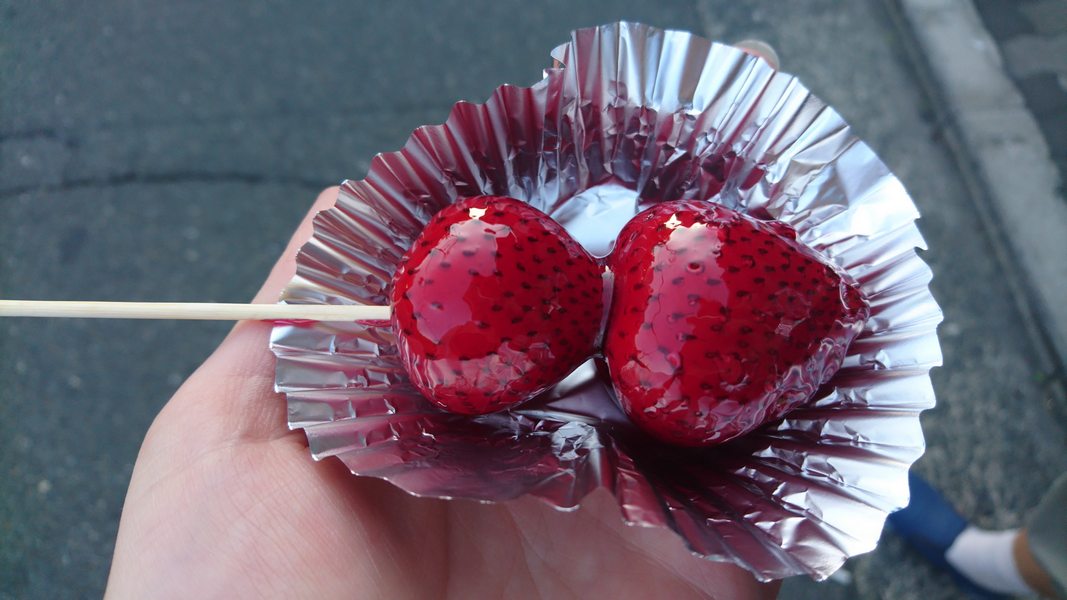
I liked all the food. I was lucky with food, but my friend often something strange: sharp kari or a cold udon, which we had to assemble ourselves. It was good that the waitress helped us, she showed us how to put everything together. It’s like Lego – you have to assemble it yourself: mix this, pour that, etc. When we mixed everything together, he said – I do not want it, it’s cold, like okroshka (a Russian soup).
What was unexpected about food?
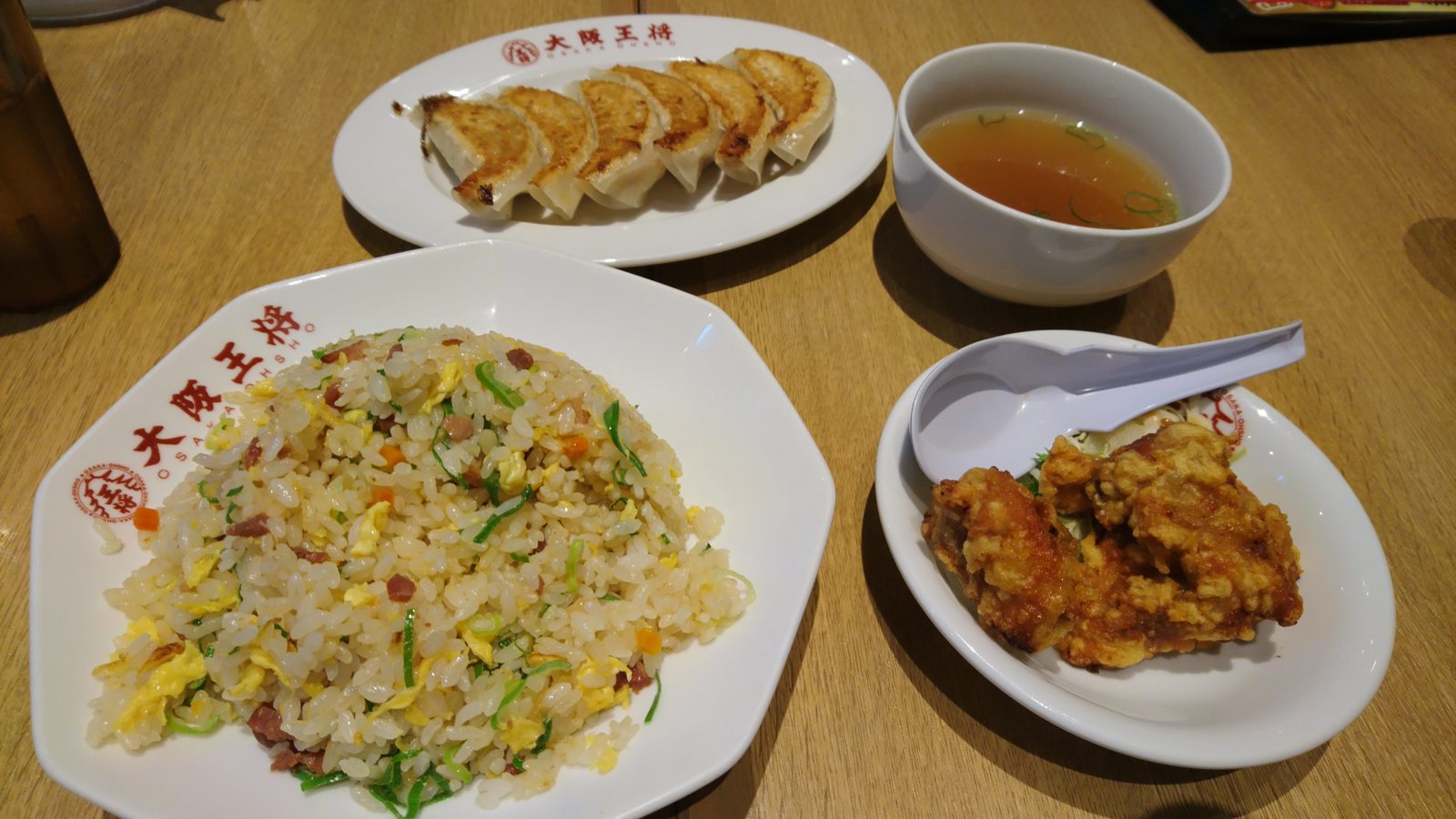
Potato cutlets were super. There are also egg cutlets. There are cutlets from beef – I did not expect such a trick in life, it is made of potatoes with onions, carrots and a bit of ground beef. Tasty, but I did not expect it to have so little beef.
Watermelons are very tasty too. We liked that they come in sizes: S, M, L, XL. We bought a watermelon for 2000 yen, the most expensive watermelon in my life – around 1000 rubles. We bought peaches, kiwi, grapes. Everything was natural. They are crazy about natural food.
We went to a souvenir shop in Osaka, but immediately realized that this was a lost cause. The city is famous for its food. The street is about two kilometers long, there is only food, there are no “souvenirs”, as we understand them. All souvenirs are edible: boxes with sweets. We saw traditional street souvenirs only in Tokyo. In the rest of the places – it was food. With souvenirs you need to know in advance that there will not be such souvenirs like plates.
How about Japanese apartments?
We liked them. Although the apartments were little, especially in Tokyo. We liked the apartment in Nagoya. In Osaka, we ended up in the Korean Quarter. There we had an adventure. In Japan, people who rent an apartment should get a license now. Many did not have time to do it. We had three apartments that were canceled. One was canceled in advance, I managed to find another one. The other two were canceled right before the arrival. Therefore Airbnb gave coupons for the canceled ones. They returned the cost of the apartment and another coupon for the same amount. That’s the only reason I could find a new apartment since the prices were already very high. There was a big apartment in a new building. Beds were normal. However, we realized that sleeping on the floor is rather convenient. There are mattresses (futons) that can be assembled in an armchair, very comfortable.