Marianna. Alexandrov
Interview with my grandmother, Marianna Yakovlevna, 90 y.o. (born in 1928)
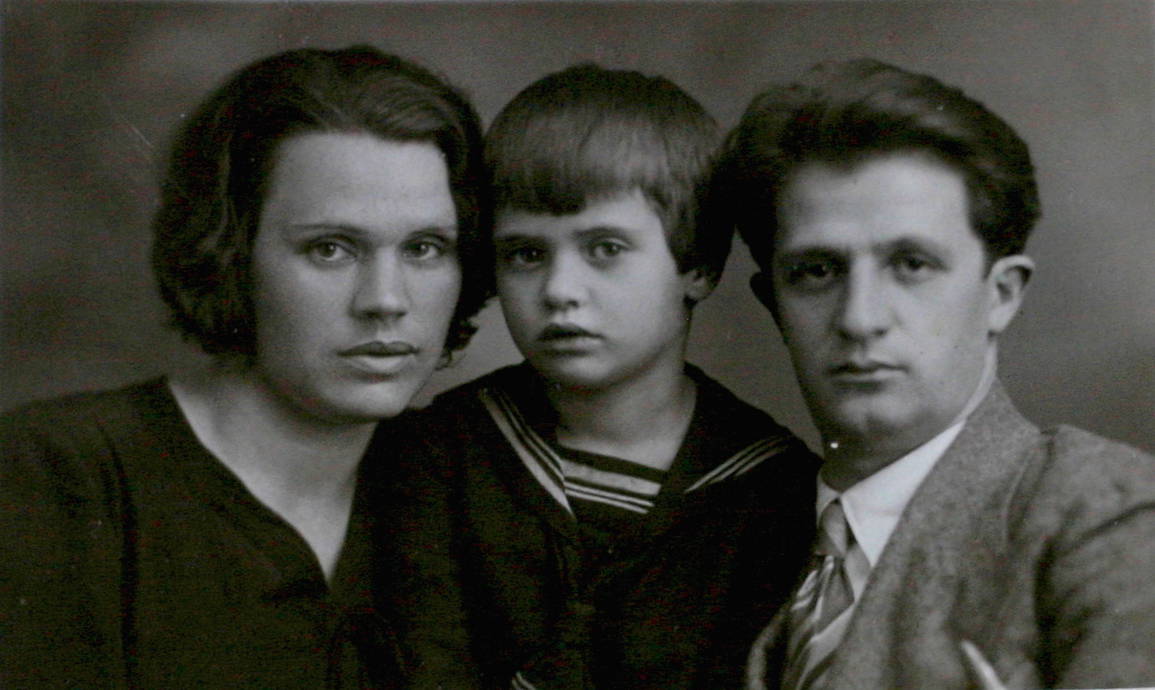
Grandmother
(in the center)
Where were you born?
I was born in Simferopol.
What did your parents do?
My mother worked as a teacher in courses on the elimination of illiteracy. People learned to read and write. Many were illiterate.
And Dad?
That is a complicated story. My dad was an editor of a newspaper in Simferopol. Mom loved another man who fought on the side of the Whites. She did not know, she thought he was Bulgarian. Then he asked her to emigrate, but she did not go. I do not know how she married my father. She loved the other man who fought for the Whites and was shot at Feodosia. He was not killed, Bulgarians rescued him. There was a settlement of Bulgarians near Feodosia in Koktebel. They noticed him and took him out. They brought him on a cart under hay in Novotsaritsino and he settled in the house where my mother lived. He fell in love with her, she thought he was a Bulgarian. I do not know whose daughter I am. His or the father. Recently I have opened my mother’s archive and found a certificate that shows that she did not work for half a year. He took her to Sudak, they lived there. Then, apparently, he made an agreement with smugglers and left for Turkey, my mother refused. She returned to Novotsaritsino and began to teach again. She was already pregnant with me for a month. My mother did not tell me, because I loved my father and I thought that this was a story that she came up with to save me from the Germans because the father was a Jew. The children of Jews were killed. All the time I thought that she made up this story. But then I saw this certificate and realized that it should have been true. My father was married, but he had no children. Perhaps he could not have children. I think he married a pregnant woman to have a child. After the birth, they left for Yalta and lived in Yalta for three years.
Where did you grow up?
In Yalta, then in Samara, then in Voroshilov.
Where did you go to school?
In Voroshilov (now Ussuriisk). Earlier it was called Nikolsk-Ussuriisk. I graduated first class in Voroshilov. Then my father send us to Vesyegonsk. My mother was born there. Arrests already began, he was afraid that he might be arrested, so he saved my mother by sending us to Vesyegonsk. If someone is arrested as an enemy of the people, then the wive was also arrested (I learned this later). He did not write letters to this address. They agreed that he would write to a post office in Moscow for her to pick up. Mom went to Moscow, but not a single letter was received. He was already arrested. Not a single letter came. Suddenly, my mother received a large sum of money from there. It is unknown from whom, a mysterious story, who sent this money? The father entrusted someone this address, he was already arrested. They sent a very large sum. Mom wrote letters trying to figure out who sent the money, but nobody answered. We left for the Crimea with this money.
Mom could not get a job because it was dangerous. Aunt Klava, her sister, worked as a paramedic, the salary was small for the three of us. And then my mother received the money. We left for the Crimea and settled in a Tatar village in the Bakchisarai district. She began to work in an elementary school.
In which class did you go to the Crimea?
In the third. I finished my second class in Vesyegonsk. After the third class we moved to Dart. There was a seven year school. I finished five classes, then the war began. There was a German solder left in the village to watch out for order. Once he came to my mother and he had a bundle of papers in his hands. He gave these papers to my mother to read. It was written there that I was a Jew, that my father was a Jew. I do not know exactly, my mother did not tell me the content, but the meaning was this. These were denunciations to him that I was Jewish. He tore these papers in pieces in front of my mother and gave the pieces to her. My mother threw them in the stove and they burned. That is, I was saved by a German. I do not remember how this man looked, I remember his hands. I was in this room, I saw the whole situation. I remember only his hands, his silhouette. He was a big man, elderly. They began to write to Setler, to the district commandant’s office about him, that he did not react. A whole SS troops truck came to us. I was not at home, I had a girlfriend, they were from Feodosia. Someone came and said that a truck with SS troops had stopped at our house, I ran home, they stopped me – you do not have to go there, but I broke away and ran. I had two braids, two bows. I open the door, joyful: “Hello” I said. I had no fear. There were tall handsome guys. They talked with Mom.
How did they talk to your mother? In what language?
In Russian. I do not remember the conversation. When I came the conversation was already over. The guys were young, handsome. Only one was older – he stood next to me, he kind of caressed my head. I did not know then that they had a theory about the skull. I remember this gesture – it was kind of a stroke and when he reached the back of my head, he stopped the hand and felt it. Then I did not pay attention to it, only later I realized that he was testing me. The SS troops left. They did not touch me. When they left, my mother said: if it happens so, we will die together. And I thought, why die? I had no fear. My mother had a fear, and I had no fear that they could take and kill me. Absolutely no fear.
When the occupation was the school working?
No, there was not any school.
Do you remember the liberation?
Yes, it was exciting when our troops came. Earlier there was a very joyful moment when Stalingrad happened. February 43rd, if I remember right. They were mourning, going around sad. They realized that they would lose the war. After Stalingrad they understood that. All the time they were saying: “Moscow is caput! Stalin is kaput!” There was no information, absolutely. Mom did not believe, but still, there was a very bad feeling that we would remain in the occupation.
I was alone and suddenly I heard a roar. I jumped out onto the porch and saw huge wings and red stars. At first I was frightened but when I saw the red stars, I ran and raised my hands. The pilot looked at me smiling, it was close. It was just a moment, but it seemed like it lasted a long time. “Here I am, take me with you!” Then I thought – all was a lie (this was still before Stalingrad). If our pilot flies, then we will not be abandoned. It is etched in my memory: his face, as he peeks and smiles, and I raise my hands to him.
When our troops came it was a great joy. But you know, it was soon overshadowed, because of the deportation of Tatars, Bulgarians, Greeks. My girlfriend was Greek. It was terrible. Our troops just came and immediately began to expel. We lived in the same house – two apartments – with a Bulgarian family. Their son was at war, he was at the front. They were deported. It was a great sorrow.
You went to school again?
I graduated from the fifth class before the war. After the war in 44 I entered the seventh. I did not study in the sixth grade. After the seventh class I went to a technical college. Mom wanted me to finish eight years in school, so I could have a liberal arts education. But you know, as soon as the war was over, they immediately began to say that there would be a new war. Not in mass media, but there was a feeling. And I thought that I should get a profession as soon as possible. My mother was sick, she had a burn. I thought I should get a specialty to get up on my own feet. I was deciding: to build or feed, since all the houses were destroyed – it was necessary to build, and there was a famine – it was necessary to feed. I decided that it was better to feed than to build: I was told that at a construction site one must be able to swear. I consulted and went to a technical college of the canning industry.
What were the subjects in school?
I do not remember. There is a list there. All fives (best mark in Russia). I always had five. When I had an exam in physics or mathematics, I was not allowed to think at the exam.
Why?
I pulled out a ticket and I immediately went to the board to answer. When I studied at the institute, we had a lector who taught at Moscow State University and at our institute. When I took out a ticket at the exam, I realized that there was one question that I did not know at all. The topic was written in the textbook in small print so I didn’t read it. I began to respond logically. He understood that I did not know the answer, but I was answering and I answer correctly. He gave me five: for courage.
How long have you studied at the technical college?
4 years.
And then you went to the institute? What kind of institution was it?
My mother studied distantly in a pedagogical institute in Simferopol and she always pushed me to the humanities education. She did not want me to be a technician. I was not allowed to study at the pedagogical institute because I finished only seven classes, but they accepted me for the first year of distant learning. They told my mother that after the first semester they can transfer me to the full-time studies.
But something dragged me to Moscow because in Moscow was my first love. Vovka Borisov was from Moscow. So I went to Moscow because it could not be that I would not see him there. In Moscow I went to study in the dairy institute, because my grandfather was a producer of butter. Since I was an excellent student, I was accepted without exams. I sent the documents and they accepted me. I went to class on the first of September. But I did not find Vovka in Moscow.
After the first year I came for a vacation in Belogorsk. There was a girl, with whom we studied together in the technical college. She knew him, she said that he got married, went to Sverdlovsk, and had a son.
He came directly from Germany in 1946. He was an artilleryman. He came to our house. I stood at the window, we had a wonderful view of the mountains, and suddenly someone was knocking. He was looking for an apartment, but we already had someone living. He settled in our yard. The hostess told my mother that he was in love with your girl, so I’ve heard that he fell in love at first sight. Something happened with me too, but I did not understand what it was. I thought it was good that he lived next door.
We had a summer kitchen. He lived on the second floor, there was a terrace. I chopped the wood with an ax, and it always fell. I did not realize that he was watching. I used an ax for the first time, we burned straw for cooking before, but here we had the firewood for the first time. I swing, I hear – he laughs. Then he went down, chopped the firewood, and left without saying a word. I went to a friend Zina in the evening and asked he to go to the dances together. He lived with a younger soldier, who was able to play accordion. Vovka had an accordion, but he could not play. That’s how we danced with him. He once touched my cheek, but I say: you can not. He: why?
You know, during the war there was a lot of bad things, such debauchery, and I swore that until I was 18 I would not kiss anyone. I gave this oath, I was 13 years old. This was the vow, but I was not yet 18. I did not think about this oath, but still I could not cross it. I read that one person swore that he would not drink for a while, then he could not drink his whole life. Here I had it.
In the end Vovka had to move somewhere else, I suffered because of that. Once we went with a friend Mariika in the winter. There was a palmist, he said that he could predict the future. But we had nothing to pay. We carried bread that we got with coupons. I had a little makeweight piece. He said: give the little piece of bread and I will tell fortune for one of you. Mariika suggested to tell the fortune to me. The palmist told me everything right for the past, then he said that somebody will talk to me about love his love in April, and in no case should I alienate this person, because only he will bring me happiness. I began to wait for April.
Then on the fourth of April, Petya talks about his love. We studied with him in one group. He was a Crimean guerrilla during the war. I: but you are married. He: no, we were just guerrillas together, let’s go, she’ll tell you herself. I: Let’s go (because I cannot repel the person). Petya did not study well and I had a Komsomol assignment to pull him up in English. We studied together. I pulled him up to four (equivalent to “good” in Russia). Each time he would give me two candies, always the same kind. Where did he get them? There was a famine. I thought he might have stolen them, he was a diversionist during the war. One day he looked at me and said – you have a high temperature. I said: yes. I really had a high temperature. He: what do the doctors say?
– I do not go.
– Why don’t you go to doctors?
– I just don’t go.
– You should, because you have high temperature.
– So what?
I had a pneumonia and after that I had a fever. He went to the college director, they were together in a partisan squad. The director called some kind of luminaries. Petya told me and we went to see a doctor. This was before his words of love. The doctor took X-ray of my chest and said: “Miss, I do not advise you to come with young men.” But what could I do? He brought me. Next time he took me to another doctor at a polyclinic for party workers. They sent me to a tuberculosis clinic for a check. I took care of that myself. I went to the TB dispensary. There they did not put me on record. Then the coupons were canceled, the food improved and the fever went away.
So even before he took a lot of care about me, now he tells about love and it’s April: “you can not repel”. We went through the whole city and stopped in front of a beautiful mansion, he ran up the porch. I said: I believe you, come back! I think: Well, I’ll go, and what should I tell her? I believed him. So I became his bride. We went to Alushta, he swam very well. I did not bath. It was still cold.
We had to go to practice in Tiraspol. But my mother had an unpleasant situation. She was in charge of the methodological cabinet. There was a robbery, somebody broke the lock. And my mother, instead of calling the militia, opened and began to do an audit. She was accused of robbery herself and she had a lawsuit. They came to our house and made an inventory of the property. So I didn’t go to the practice in Moldavia, because I was afraid to leave my mother alone. Petya went to the practice with the girls from our room. I stayed for the practice in Simferopol. There the head of the laboratory once called me: “Stop by my office, I need to talk with you.”
I came to her. She said: “Listen, there is a girl in the laboratory, she was essentially Peter’s wife, if not for you, then he would have married her. Why do you need him? You are very young and pretty. If she does not marry Peter, she will never marry.” Can you imagine? When she spoke, I sat and looked out of the window, I did not say anything there. I got up and left silently. I began to observe this girl. I looked, I studied her. Slender, a pretty face, Turgenev’s type, they had such a nice house, a mansion. She was clearly from an intelligent family. She felt my gaze, but she never looked at me. She also studied at the technical school, but she was older. It was 1945, when I entered. They also started in 1945 but they studied only for one year. There was such a group: they just came and were immediately released to work. I liked her a lot and I thought that I should not cross her road. I was angry with Peter that he deceived me, that he betrayed her, if they had a close relationship as a husband and wife. Then I did not think that I should not push away and I decided everything.
When he came after the practice I was a stranger, he could not understand anything. I did not telling him about it. Then I passed through Mariika, that I agree to continue the relationship, but only as a brother and sister and that he must marry her. He agreed to be as a brother and sister.
Then I was leaving for Moscow. He came to say goodbye. The room was empty. I told him: you should marry her. He nodded. He left without saying a word. That’s how we said goodbye. Then I went to Moscow to the institute. We corresponded with Olya Moskaleva. She wrote me a year later, that a Crimean newspaper wrote that Petka divorced his wife (it was written about the divorces in newspapers). Then I was in Sevastopol in 1969. Mariika told me that Peter died, he drowned in the Simferopol reservoir.
What was the practice like in the technical school?
The first practice was at a destroyed factory “Labor October”. There were pots for sulphitation of apples, so that they were preserved, then they were used for jams and compotes. They brought trucks of apples and we filled these containers. I walked on water and I chilled my feet. This is when I got the pneumonia. Most of the time we did not do anything in practice, we were sitting and watching. For example, we would receive watermelons to make the jam from the crust. The flesh was fed to the cattle. We would choose the best watermelon with girls and eat. This was the practice. We would go around look and write. It was necessary to make a report at the end. There was a diffusion department, jam in basins. There was jam from walnuts for Stalin. We would go, pull out jam and eat.
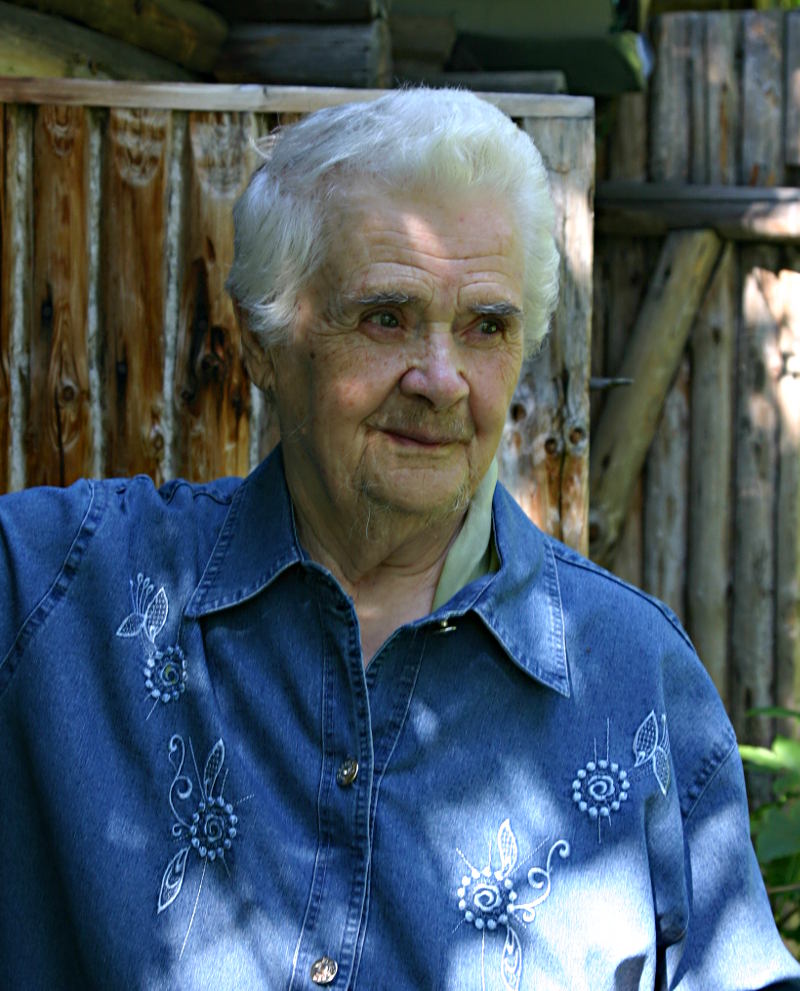
Grandmother, August 2018