Anatoliy. Working on virgin lands in USSR
– How did it happen that you went to the development of virgin lands?
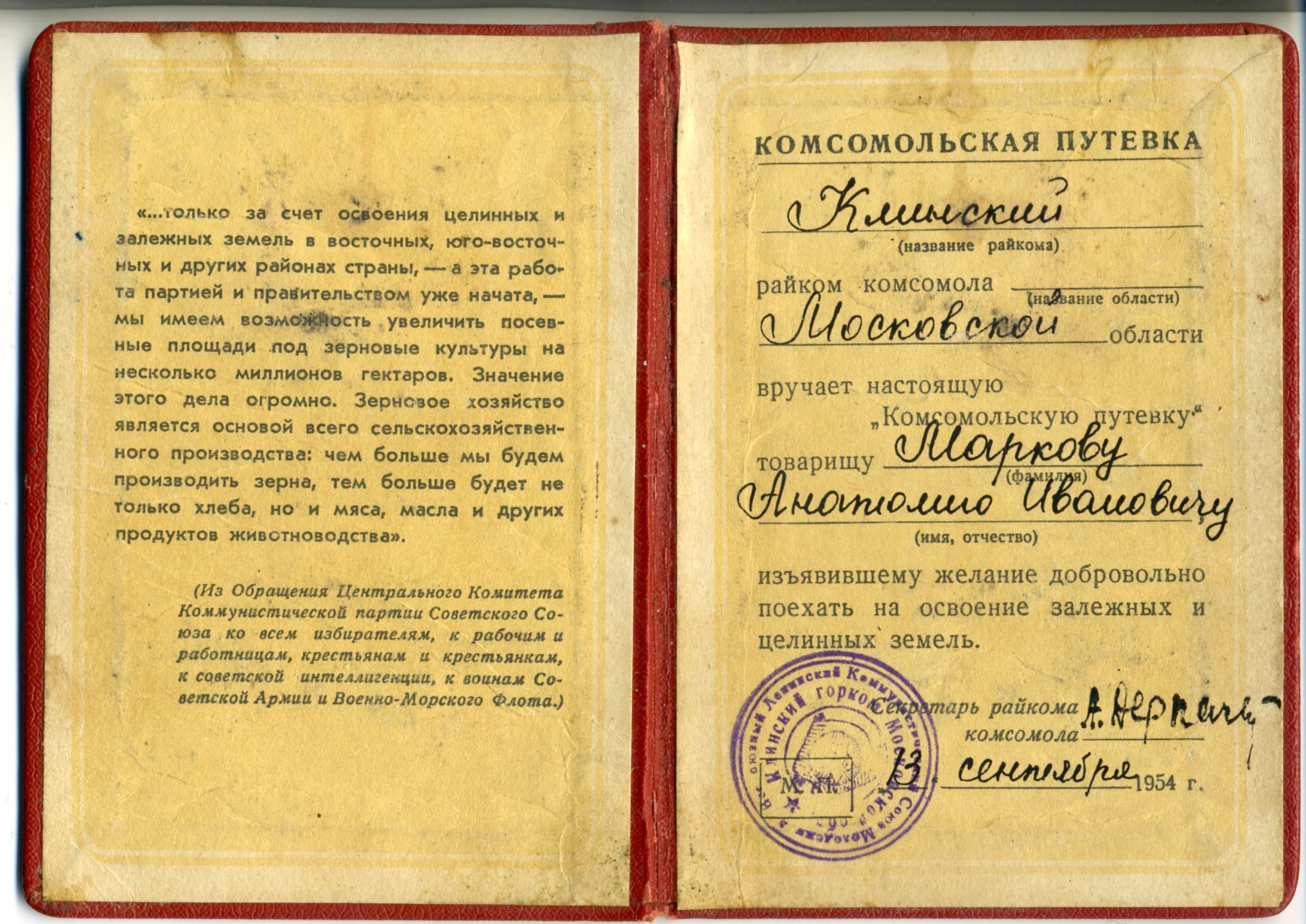
– I was ending my service in the army. It was 1954. If you were drafted in the army in September, for example, then in August, a month before the end of your service time, recruiters appear: – Who wants to go to work at virgin lands? They separated the volunteers in different groups: to go to the Volga region, Georgia, Kazakhstan etc. For some reason, the people were divided in groups according to their height. The first group – 180 cm, the second one – 170 cm, I was in the fourth group – 165 cm. If you were recruited, then you can end your military service, even though I had one more month to go. The documents were given to the seniors. Our civilian clothing was given back, it was stored in the warehouse. The mole had already eaten everything, so we went in our military outfit. Also I grew while in the army, so my civilian clothes didn’t fit me anymore. They gave us jackets and better coats.
They checked our suitcases, so that no one took away too much. They brought us to a train station with a truck. At that time, there were American Studebaker trucks. They have a winch on the front axle, if the car gets stuck somewhere in the mud, the assistant takes the hook, pulls it (as the driver presses on the gas), hooks on a tree, and turns on the winch. The car pulls itself out. They took us to Klin, because it was a railway junction and there was a committee of Komsomol. Since we are members of Komsomol, we first went to the Komsomol district committee. We were treated there very well, they immediately gave us some startup money: one and a half thousand rubles. We had about four hours free. We we went to a post office. We discussed that we shouldn’t carry around so much money. We decided to take it to the post office, you could put it in there and withdraw the money in a post office somewhere else. I left a thousand rubles in the post office and took five hundred rubles with me. We all got back and lined up in front of the train. Music began to play, the officers went with us with all the documents. First we took a train to Moscow, from Moscow there was another train.
– What kind of train was it?
– It was a usual passenger train. As we passed by Syzran, the Orenburg steppes began. Trees were only along the railway – to protect against winds.
– What do you remember most about the area?
– It was very interesting for us from the North to look at the Orenburg steppes. You go outside and immediately steppe begins. On the one hand, golden wheat stands as far as the eye can see; on the other side, sunflower grows for hundreds of kilometers. When the crops are harvested in the fall, grass grows and the wind drives huge grass balls, the so-called tumbleweed. In addition, there are many lakes, overgrown with reeds, and ducks nest there. After harvesting, many large sunflower hats remain on the field. We collected them, fried and took to the market in the city of Chapayevsk to sell. Even more remarkable are watermelons and melons, there are no sweeter ones than there.
Some rivers spread widely in Spring for a long time, sometimes until July. All the houses along the banks are built on stilts. People mostly keep small livestock (goats, sheep) and take them out to pasture by boat. The boys fish from the windows. In July, a garden is planted, and everything grows up till Autumn in watery gardens.
– All the passengers on the train went to the virgin lands?
– Yes. The train collected volunteers not only from our place, but also from other sites. We drove for a long time, I don’t remember how long, probably longer than a day. At last we stopped at the Mylnaia (Soap) station.
-When you were driving, did you know where you were going?
– We were told the Volga region, around Kuibyshev. But we did not plow the land, but were building. We were told directly that we were going to build an elevator. Those who went to Kazakhstan, plowed the land, they learned to be a tractor driver, or maybe someone could do it before. When we were leaving, they told us, that we would be also met with music. But there was no music. We arrived, the train left, we were assembled right there, the officers were running in civilian clothes. There were two officers.
– Did you arrive in the evening, morning, afternoon?
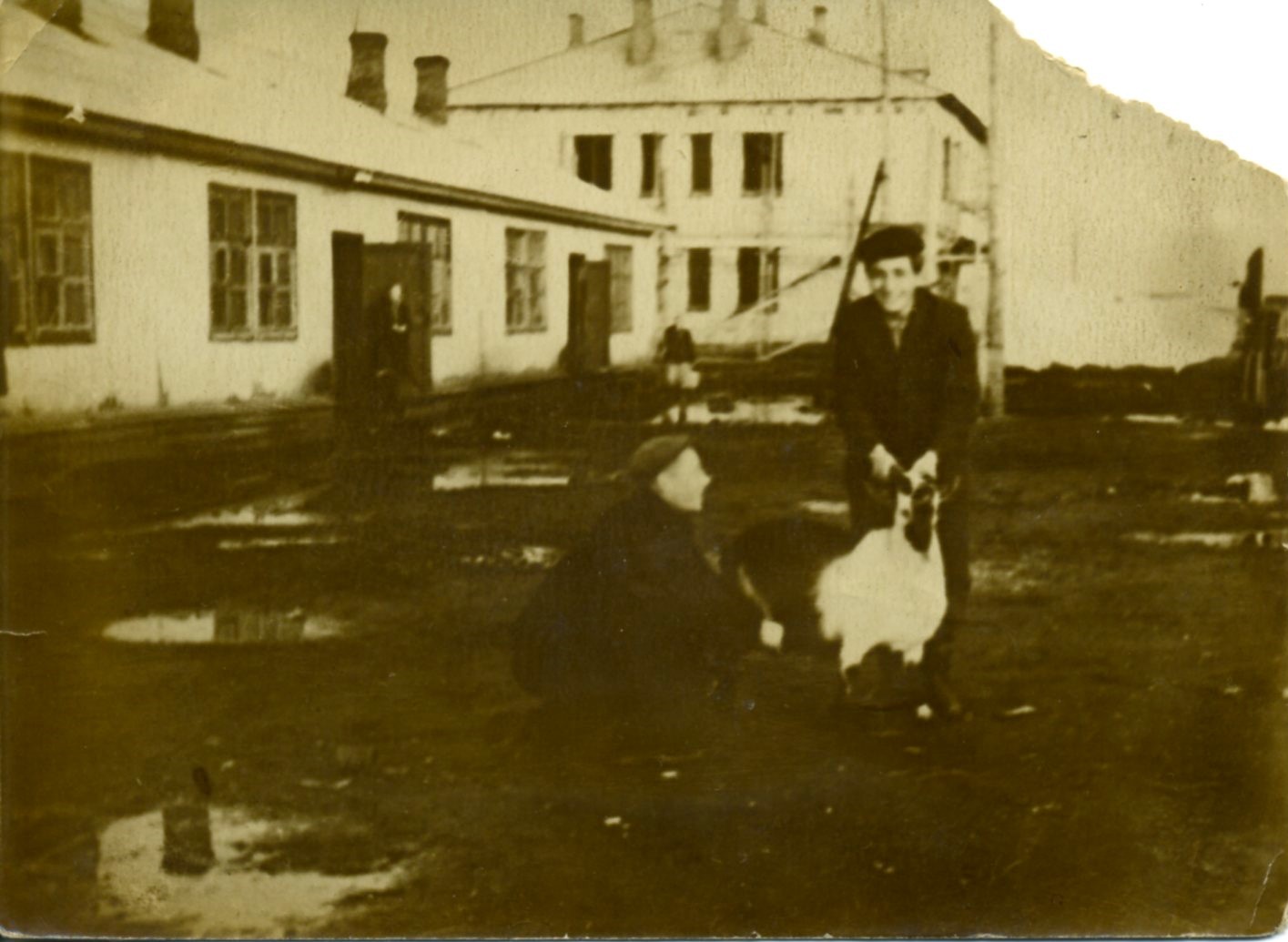
– We arrived in the morning, around 10 o’clock. An old man, about seventy years old with a beard, came. He introduced himself to the officers and said: “Come with me, I will show you where you will live.” He turned out to be the commandant. He took us to a barack, one-story, the roof was about 10 meters high, a long corridor, four entrances. Rooms were for 10, 15, or even for 20 people. The rooms were large. Beds were along the windows and along the walls, a lot of space in the middle – one could dance there. We were lucky, we were 15 people in the room. They told us to rest for a week. Dining hall was nearby.
– Was the dining hall in a separate building?
– Yes the dining hall was in a separate barrack. There was also a shop. All buildings were nearby: 500 meters to work, 30 meters to the club, 20 meters to the dining room, the store is also nearby. That year, the harvest was very poor, if you go to the dining hall, maybe they will give you 2 slices of bread for lunch. You could also eat without bread. There was no bread in the shop either, but you could by cookies. We would take a kilogram of cookies and canned meet: this was our lunch. There was no bread, but for some reason the cookies were sold.
– When you arrived, were the rooms empty? Nobody lived there?
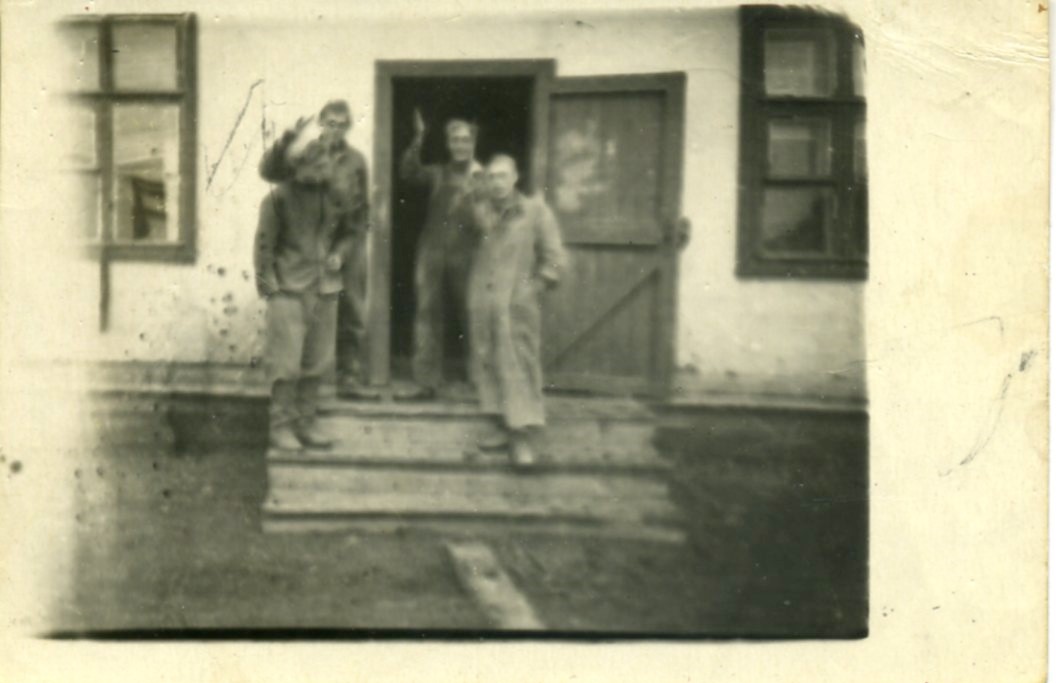
– Well, if someone lived, they moved out. Some family lived at the end of the corridor. So our life there began. At first, while we were getting used to it, it was boring. But then, in a couple of weeks, they brought girls from Leningrad region, who worked on peat props and it became more cheerful. There were club dances and movies almost every night.
From August 1954 to September 1955, a huge grain elevator was built, which began to take the grain of the new harvest. Before that there were not enough grain elevators, and the crop was lost in herds or burned in piles. I traveled there to get more experience in the speciality that I had acquired in the military, but there they already found electricians so I had to work as a concrete worker, then as a carpenter, according to my civil profession. After that they transferred me to the mechanics group, I was a mechanic of the 6th category. The work at height was dangerous, but the salary was higher. When the elevator building was finished, two of us were transferred to the installation of lifts and flight of stairs. The girls, who arrived recently, worked as plasterers, ancillary workers, and for the maintenance of lifts and stone crushers. The work was carried out in 2, sometimes in 3, shifts. Although tired, we ran to dance after work. By this time, we got to know to each other very well. There were many weddings, we also celebrated birthdays.
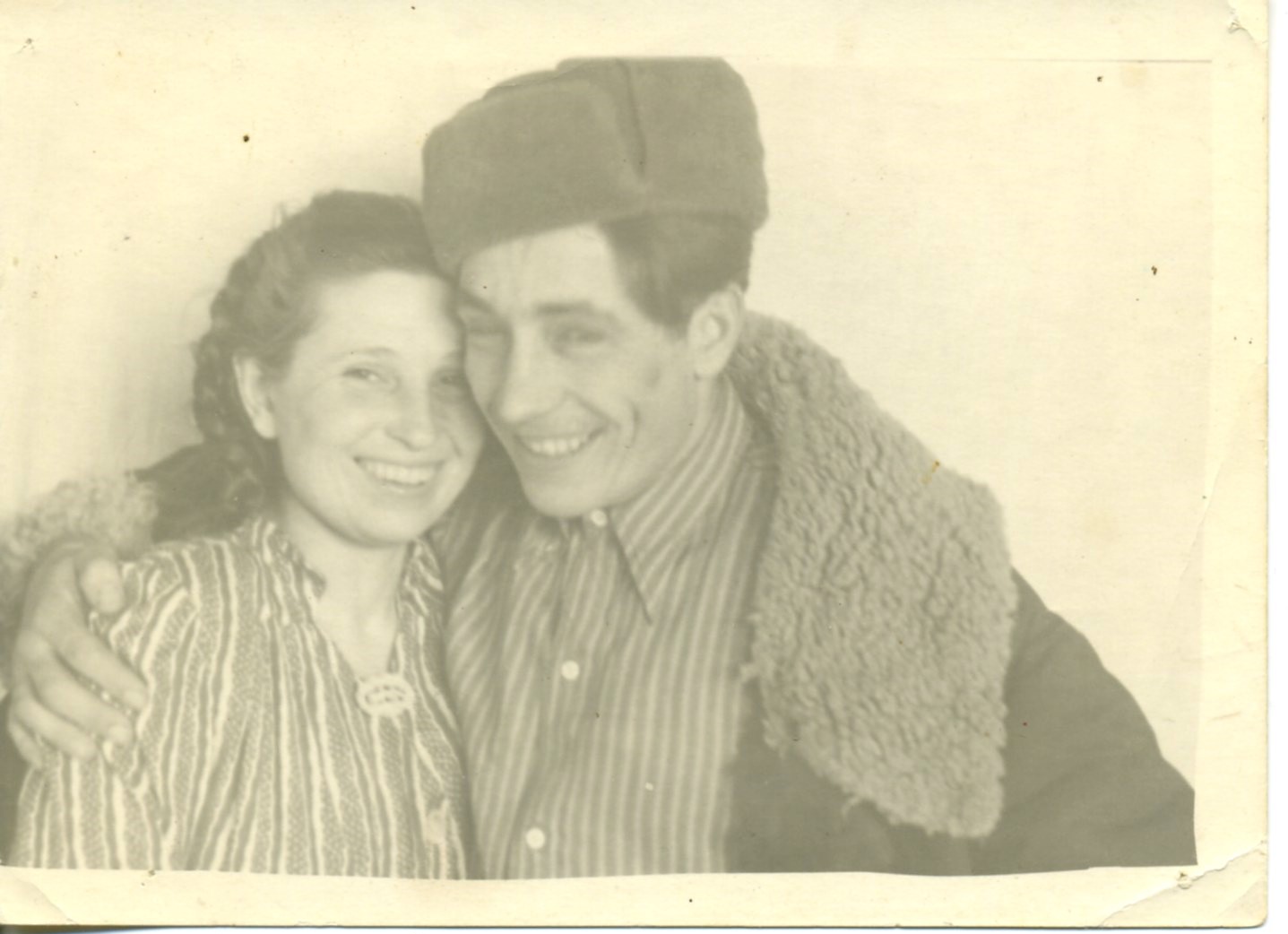
At one of these Komsomol wedding, a girl was sitting next to me, her name was Tanya, I liked her a lot. She was very kind, affectionate, took care of me at the wedding: “eat this or that”. From that wedding of my friend, I started to see her often, we got in love. Soon we also married with her, she was from Voronezh.
As we finished building the elevator, they wanted to send us to Syzran, also to a construction site, but we decided to go to Rybinsk. My mother lived alone and was often sick and we already had a daughter, Lena, in September. We did not stay there but received documents and went to my home.